
Pop/Review Lacey Lune - The Capital Club
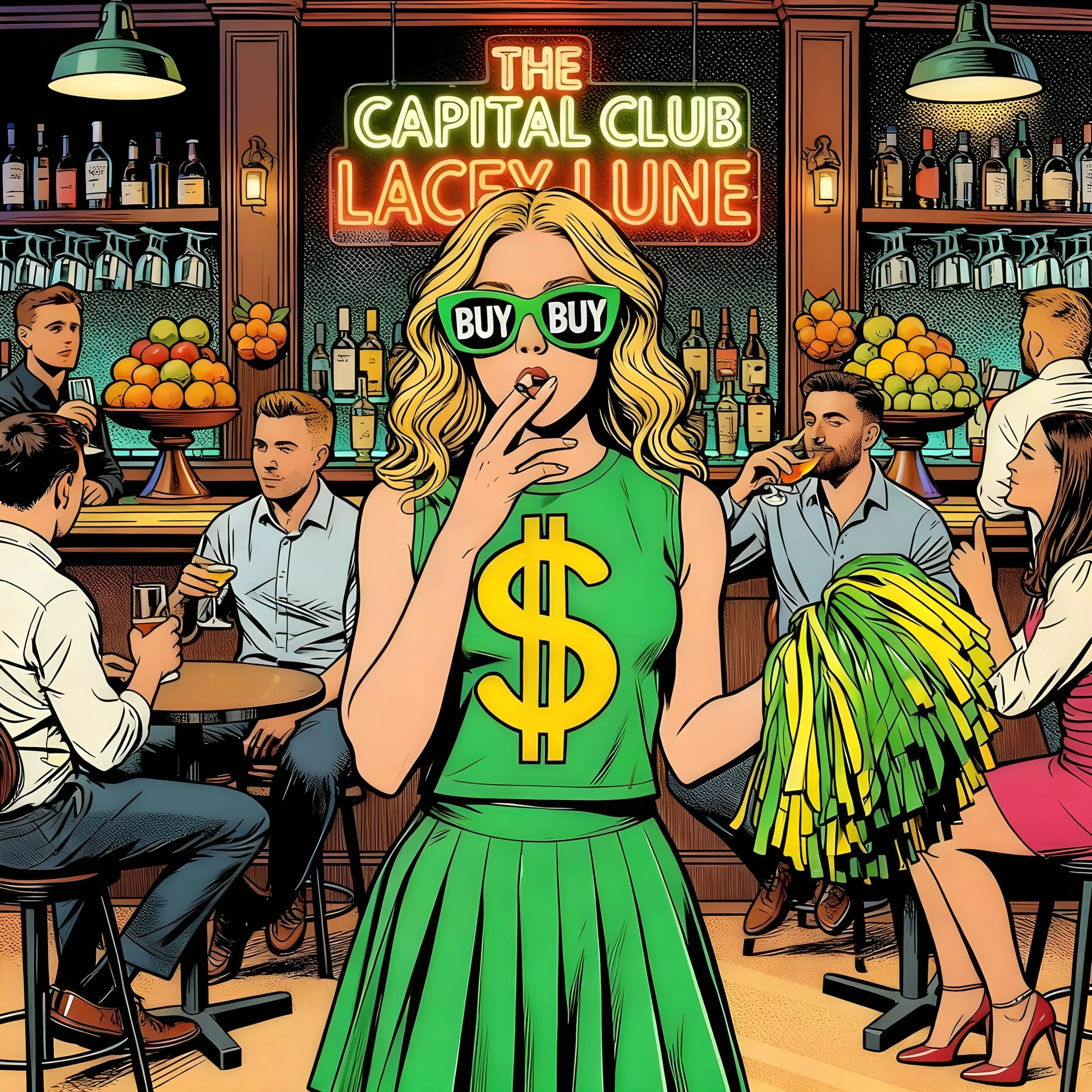
Lacey Lune is a genre-fluid pop auteur whose work moves between retro soul, glam-pop, noir electronics and bruised singer-songwriter confession. Her previous releases established a shape-shifting vocalist with a taste for self-mocking glamour, emotionally volatile hooks and arrangements in which seemingly incompatible styles collide without losing their centre.
Lacey Lune’s “The Capital Club” is a sharp, deliberately uncomfortable examination of identity in a world where everything seems destined to become content. Moving between skewed art-pop, noir electronics, bruised balladry, and spoken-word satire, the album interrogates the language of branding, empowerment, therapy, sex, sobriety, and self-care, exposing the contradictions beneath contemporary self-presentation.
One of the record’s standout moments, “The Nurse with Wound List,” offers a surprisingly catchy and tender love letter to radical listening. Its intriguing premise suggests that genuine attention can become an act of intimacy, creating a compelling contrast with the album’s broader skepticism toward manufactured authenticity. Here, Lune demonstrates that conceptual experimentation can still carry warmth and melodic appeal.
“The Winners of Capitalism,” featuring Nada UV, takes a more caustic approach. Framed as a poisoned victory lap, the track examines people who have learned to commodify themselves before someone else can do it for them. Its central idea captures the uneasy relationship between personal ambition and a system that rewards turning identity into a marketable product.
Meanwhile, “Sex Is Where We Hide Things” explores intimacy as camouflage, confession, and avoidance simultaneously. Rather than treating sexuality as a straightforward subject, Lune examines how closeness can conceal as much as it reveals, complicating the distinction between vulnerability and performance.
Across these different perspectives, humor becomes an essential instrument. The album’s melodic accessibility draws listeners into ideas that might otherwise feel confrontational, while its deliberately uneasy atmosphere prevents easy conclusions. Lune understands that rebellion itself can become another commodity, complete with its own carefully cultivated image.
Ultimately, “The Capital Club” is an incisive portrait of modern self-branding, asking what remains authentic when even our most private experiences become currency.
